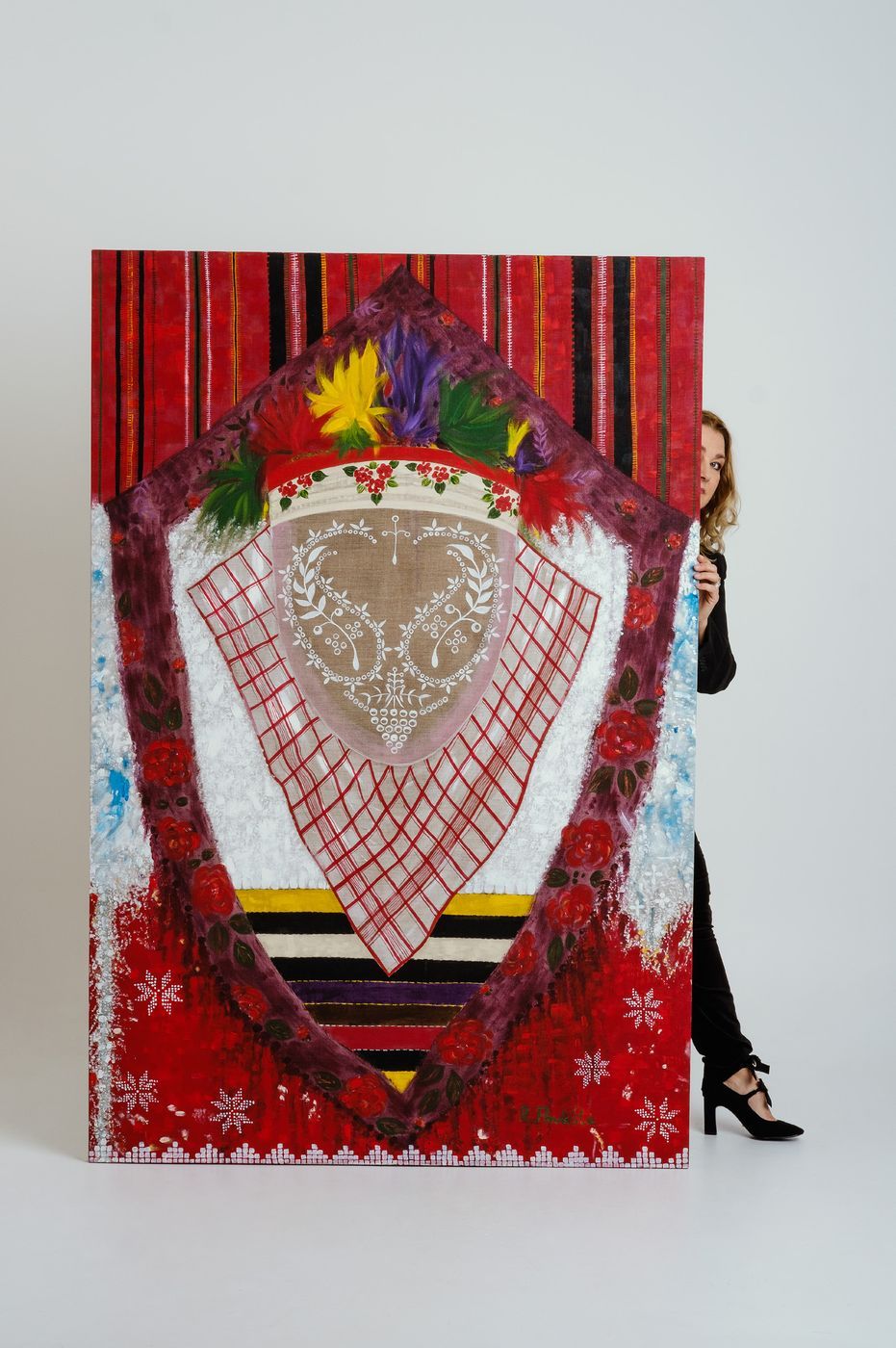
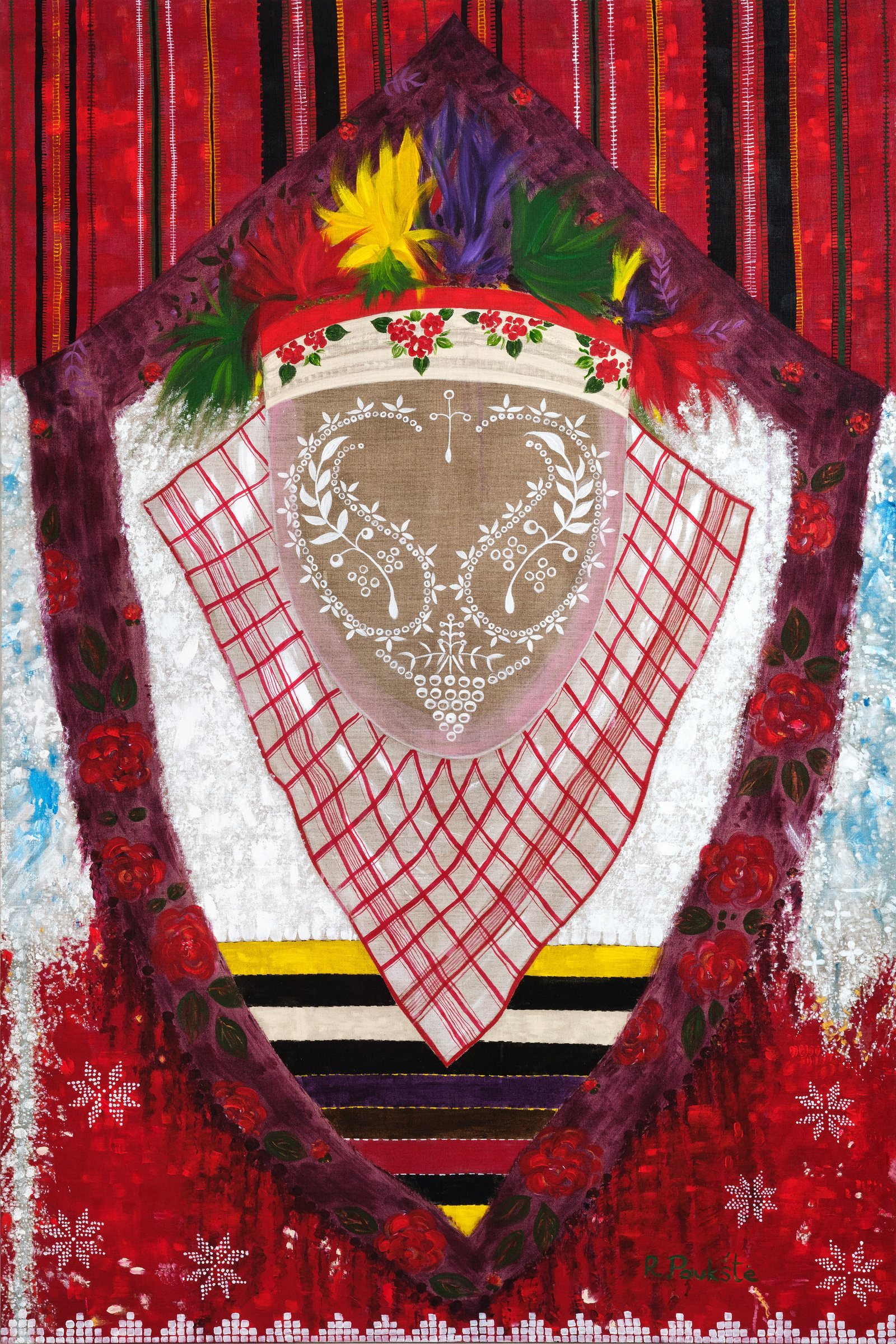
The Woman Who Is the Cosiness
Moteris jaukumas
- Collection
- Woman in Patterns — Lithuania
- Region
- Žemaitija · Samogitia
- Year
- 2016
- Medium
- Acrylic on natural linen canvas
- Dimensions
- 195 × 130 cm
Artist-Signed Fine Art Print
A fine-art reproduction of the original painting, hand-signed by Rima Paukste. Clearly distinguished from the original acrylic on linen.
All prices include VAT and complimentary shipping to eligible continental European destinations.
For delivery outside our standard European shipping area, please contact us for a personalised shipping quotation.
Delivery within 2–4 weeks of the order date · rolled canvas, unstretched and unframed · Certificate of Authenticity included
Print details
Each print bears the artist's original handwritten signature, applied by hand — never a reproduced signature.
Premium Quality Canvas
We use premium-quality, exceptionally durable white canvas with a refined, natural fabric texture. This carefully selected material ensures outstanding colour accuracy, faithfully reproducing every shade and subtle nuance of the original artwork.
Each piece is printed using advanced 12-colour printing technology with genuine, eco-friendly, odourless inks. The result is rich, vibrant colours, exceptionally smooth tonal transitions, and a beautifully matte finish that captures delicate shadows and the finest details.
The ink manufacturer guarantees over 100 years of fade resistance, ensuring that the artwork retains its original beauty and colour intensity for generations.
Shipping & Presentation
Each artwork is carefully packaged and delivered by post or courier service within 2–4 weeks of the order date.
The canvas is supplied unstretched and unframed, carefully rolled for safe transportation and ready to be stretched onto a wooden stretcher frame.
Every artwork is accompanied by an original Certificate of Authenticity, certifying the authenticity of the artist's work.
Original Artwork — Price Upon Request
Originals are offered by private enquiry. Shipping, insurance and installation are arranged individually.
The beloved one, enveloped in shawls, warmed up and adorned, with rosy cheeks.
Even in the cold, she has the strength to provide warmth. Always full of energy, cosy, and kind, she embraces everyone with love. With so many shawls, she has enough to envelop each person in her warmth.
The plant motifs symbolise the renewal of life that arises from the interaction between the masculine element of heaven and the feminine element of earth. Plant motifs are intertwined with celestial symbols. The fruit of the interaction between heaven and earth is depicted as a plant.
Continue reading
The star with eight beams on a red background symbolises Aušrinė, the goddess of love and the feminine deity of the morning star. In ancient times, Lithuanians associated her with beauty, youth, and health. Aušrinė is the first to light up the sky, dispelling darkness, and is closely linked to the Sun in folklore. She is often regarded as the daughter of the Sun.
Stripes symbolise the ability to create, to give birth.
The grass snake represents the energy of life and inner strength.
A snake, in its time, sheds its old skin, thus replacing the old with the new. It is capable of continuous renewal, which is why snakes in general were worshipped and considered sacred animals. Snakes and grass snakes share a connection with the Sun, basking in its warmth to gather heat energy. Snakes and grass snakes were thought to guard people's health.
The colours
- Green represents nature and peace.
- Red is the colour of activity and energy, representing the vibrant life of spring.
- Black is the colour of the earth. It represents life and has always been the colour of the Mother Goddess.
- Yellow is the colour of the Sun and gold, implying radiance, shimmer, and glow, reminiscent of gold, silver, and copper.
- White denotes holiness. It stands for the capacity to be calm, beautiful, harmonious, foster harmonious relationships, and remain healthy and integral.