The Woman of Joy
- Collection
- Woman in Patterns — Spain
- Region
- Canary Islands
- Year
- 2022
- Medium
- Acrylic on natural linen canvas
- Dimensions
- 195 × 130 cm
Artist-Signed Fine Art Print
A fine-art reproduction of the original painting, hand-signed by Rima Paukste. Clearly distinguished from the original acrylic on linen.
All prices include VAT and complimentary shipping to eligible continental European destinations.
For delivery outside our standard European shipping area, please contact us for a personalised shipping quotation.
Delivery within 2–4 weeks of the order date · rolled canvas, unstretched and unframed · Certificate of Authenticity included
Print details
Each print bears the artist's original handwritten signature, applied by hand — never a reproduced signature.
Premium Quality Canvas
We use premium-quality, exceptionally durable white canvas with a refined, natural fabric texture. This carefully selected material ensures outstanding colour accuracy, faithfully reproducing every shade and subtle nuance of the original artwork.
Each piece is printed using advanced 12-colour printing technology with genuine, eco-friendly, odourless inks. The result is rich, vibrant colours, exceptionally smooth tonal transitions, and a beautifully matte finish that captures delicate shadows and the finest details.
The ink manufacturer guarantees over 100 years of fade resistance, ensuring that the artwork retains its original beauty and colour intensity for generations.
Shipping & Presentation
Each artwork is carefully packaged and delivered by post or courier service within 2–4 weeks of the order date.
The canvas is supplied unstretched and unframed, carefully rolled for safe transportation and ready to be stretched onto a wooden stretcher frame.
Every artwork is accompanied by an original Certificate of Authenticity, certifying the authenticity of the artist's work.
Original Artwork — Price Upon Request
Originals are offered by private enquiry. Shipping, insurance and installation are arranged individually.
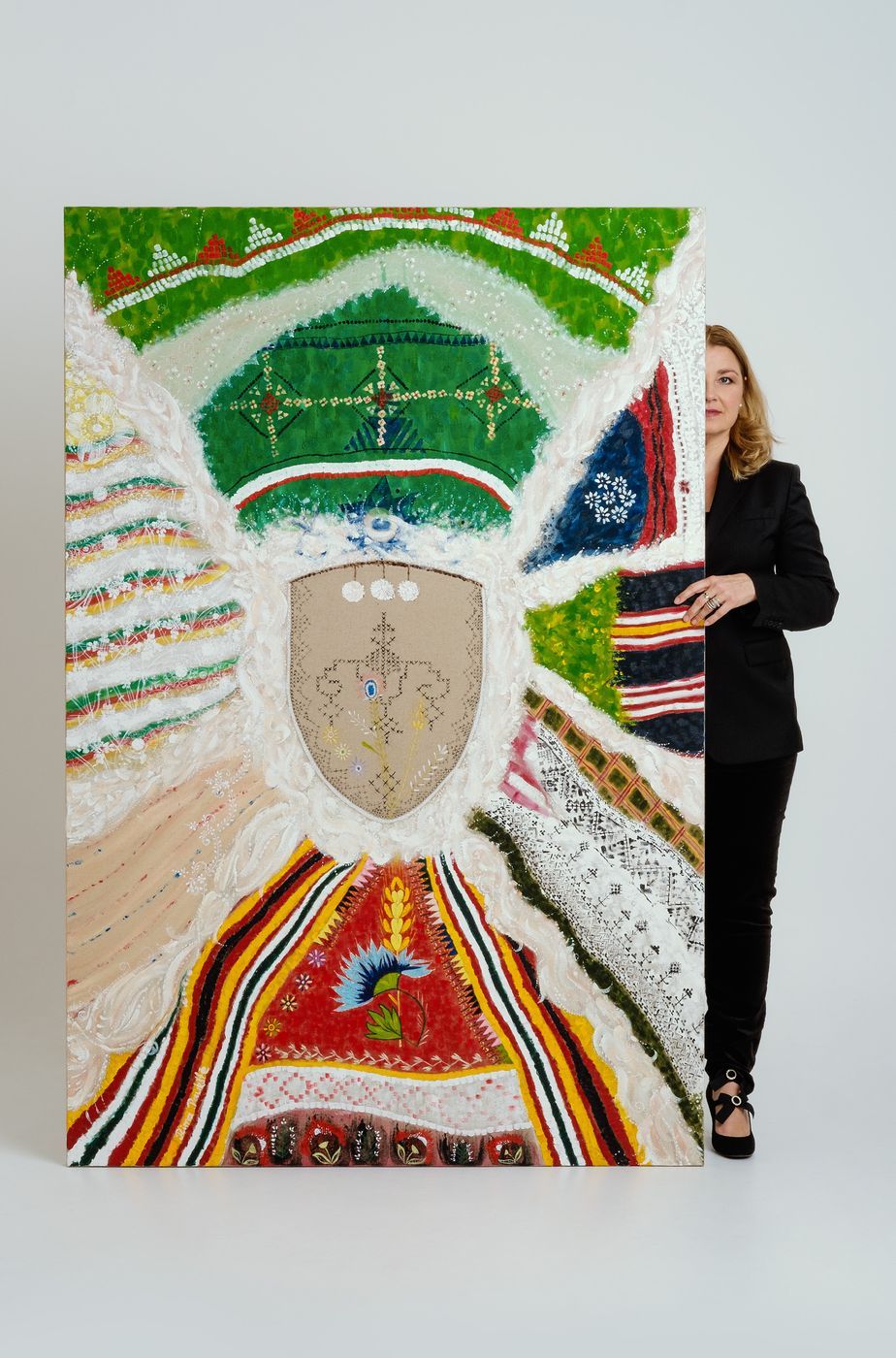
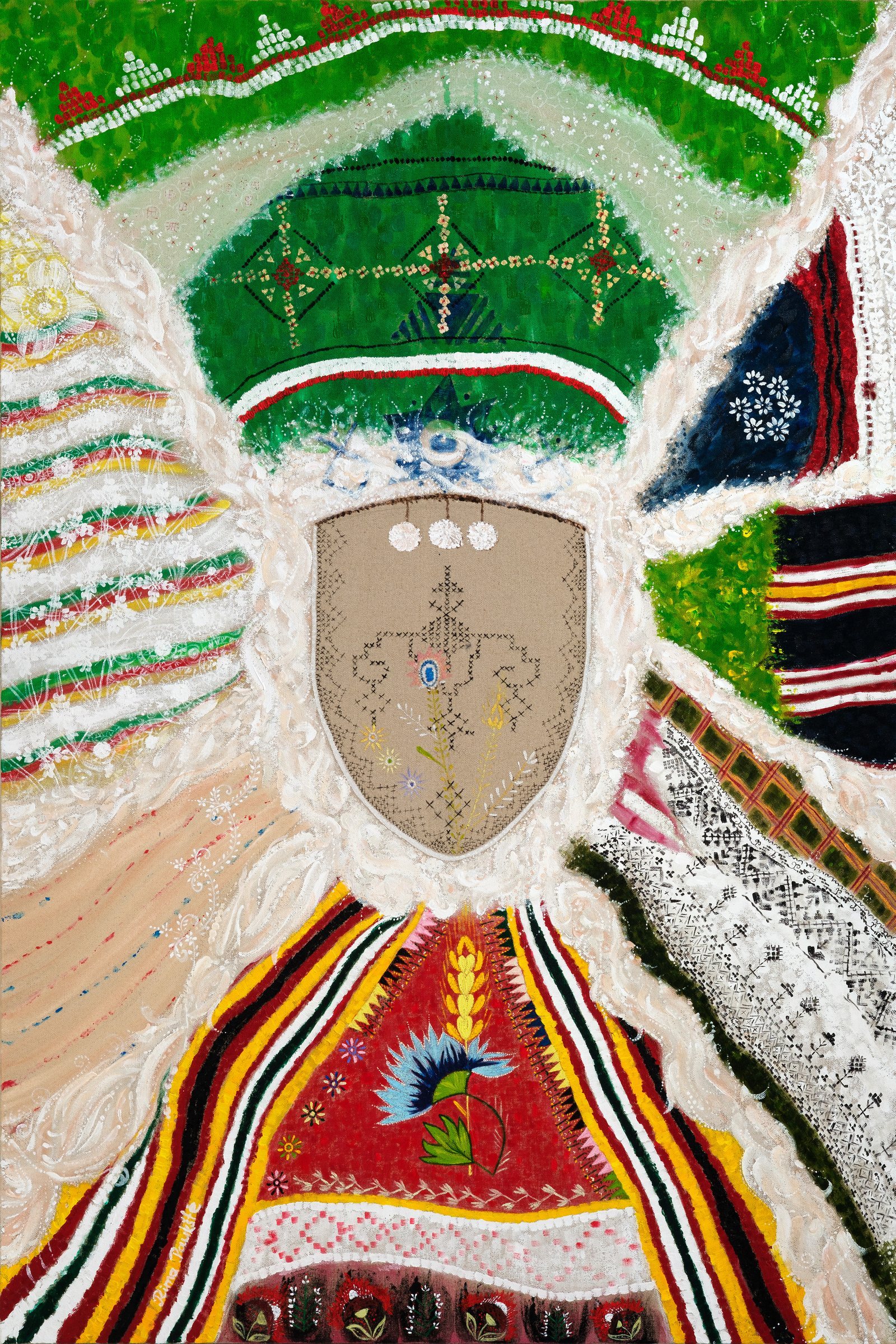
Look at the beautiful, cheerful canaries living here! They're all dressed in bright colours, chirping, cheering, and frolicking! So much laughter and humour fill their songs. Oh yes! They jest and make you laugh with the verses of their melodies. The sun surrounds each island, creating a scene where everything swirls, overflows, shimmers, and comes together in a circle – like dancers entwining and intertwining in pairs. Hey, Canary Islands, you merrymakers! Your laughter is contagious, full of life, contrasts, surprises, and the beauty of the sun. Nature, ablaze and bubbling with flames, calls out to enjoy this day!
The painting maps the seven islands: Gran Canaria at the top, Tenerife at the bottom, Lanzarote and Fuerteventura on the left, and La Palma, El Hierro and La Gomera on the right.
In the painting, the Woman appears like a shell adorned with dancing, intertwined braids. Between these braids, the Canary Islands emerge in their distinctive patterns.
Continue reading
The ancient inhabitants of the Canary Islands, the aboriginal Canary Islanders, were once likened to canaries, hence the name "canarios." Their traditional clothing, known as "tamarko," reflected their harmony with nature, as they adorned themselves with nature's gifts. As time passed and conquests occurred, the islands welcomed new inhabitants from Africa, Europe, and America. The patterns intermingled, the nature transformed, and worldviews evolved. The strangers carried new symbols, passion, and joie de vivre to the Canary Islands like the wind from distant worlds.
In the painting, the archaic blue patterns hovering over the head and three symbolic shells represent the spirit of the Aboriginal period. These symbols are the language of their ancient patterns.
I believe that the old world of the Canary Islands and ancient Europe shared a similar worldview, perhaps even a common symbolic language. To better understand these symbolic patterns, we will explore the archaic meanings of Baltic and Aesti symbols.
In archaic Baltic culture, the triangle symbolised a heavenly shelter, the roof of the world, a spiritual guardian.
A heptahram, a seven-pointed star with a dot and surrounding dots symbolises the very beginning – everything in one. It represents the source of light and individuality.
A rotated square/an eye of a crow (varnaakis) signifies fertility, the earth, and the "navel of the world."
The two lines crossing above the square represent the dome of the sky, symbolising heavenly guidance and protection.
In the upper part of the painting, the green landscape of Gran Canaria is depicted.
The sign of Krustas (the rotated cross) is a sign of eternal life. It stands for a protection, a blessing. It symbolises a person who is affected and protected by the forces of heaven and earth. At the same time, the person is the link between the two. The arrow from above signifies heavenly protection, and the arrow from below indicates the earthly forces acting on the person. At the intersection of these "above" and "below" powers, the person finds themselves at a point of transformation, in a dangerous, precarious state – yet at the same time protected and sheltered both by the "above" and the "below". A knot signifies magical protection. It is the meeting point of the powers of heaven and earth. It is a symbol of transformation, indicating a change, a shift from one stage of life to another. The moment of transformation is precisely that point of intersection between two different states. It is a symbol that reminds us of the necessity of human change – inner, spiritual, outer.
The wavy pattern at the top, along with the double wavy red and white line, represent the symbol of the goddess Mara, also known as Ria of the Sea (Marių Rija) or the One Who Sees the Sea (Jūrmatė). She is a deity capable of creation and giving birth.
The herbs and flowers have long been used as a means of expression. The plant motifs symbolise the renewal of life that arises from the interaction between the masculine element of heaven and the feminine element of earth. Its fruit – the plant – is depicted.
The colours
- Blue symbolises eternity.
- Green represents nature and peace.
- White denotes holiness. It stands for the capacity to be calm, beautiful, harmonious, foster harmonious relationships, and remain healthy and integral.
- Black, the colour of the earth, represents life and has long been associated with the Mother Goddess.
- Redness of the lily is the colour of activity and energy, reflecting the vibrancy of life in spring.