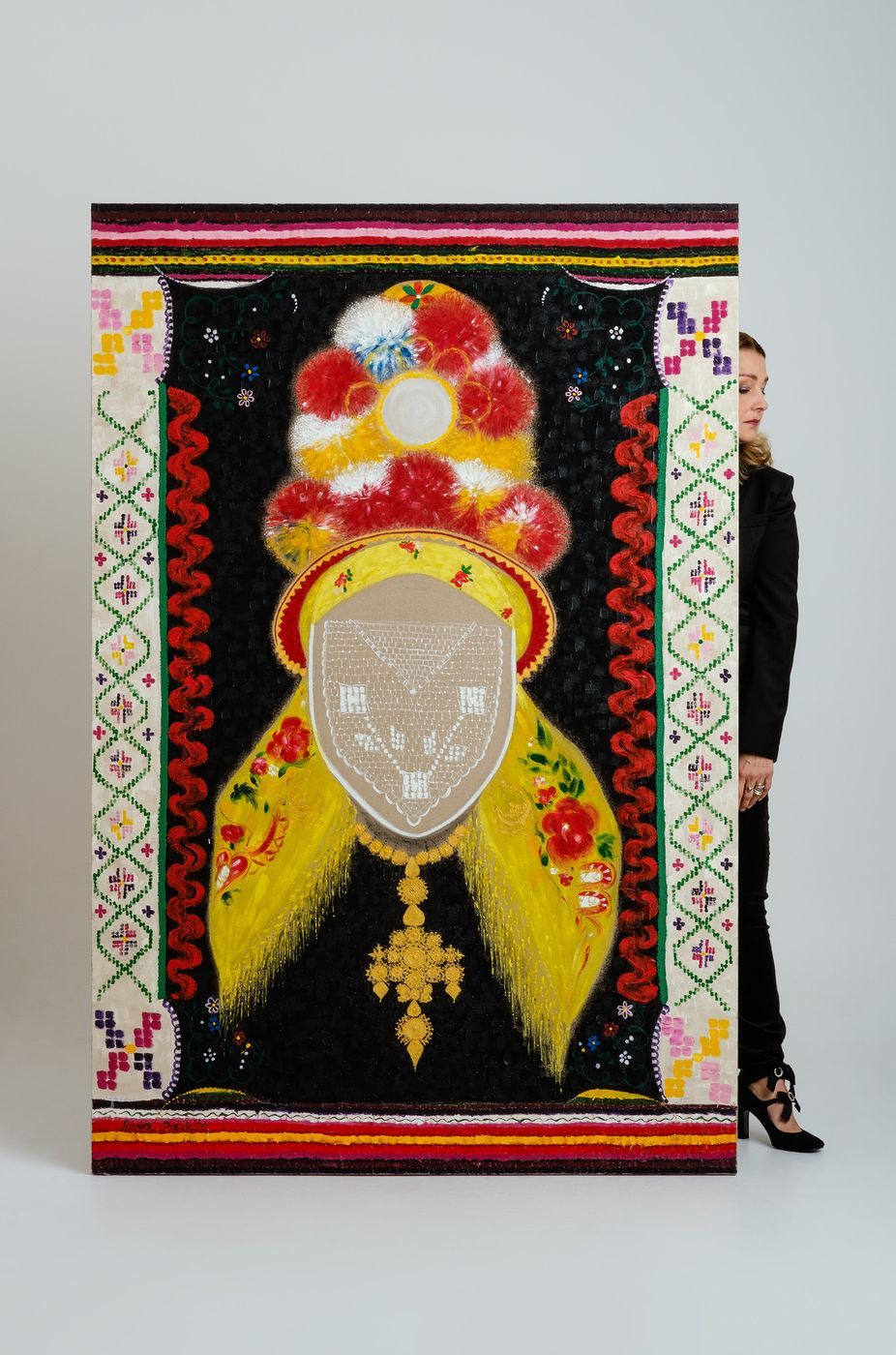
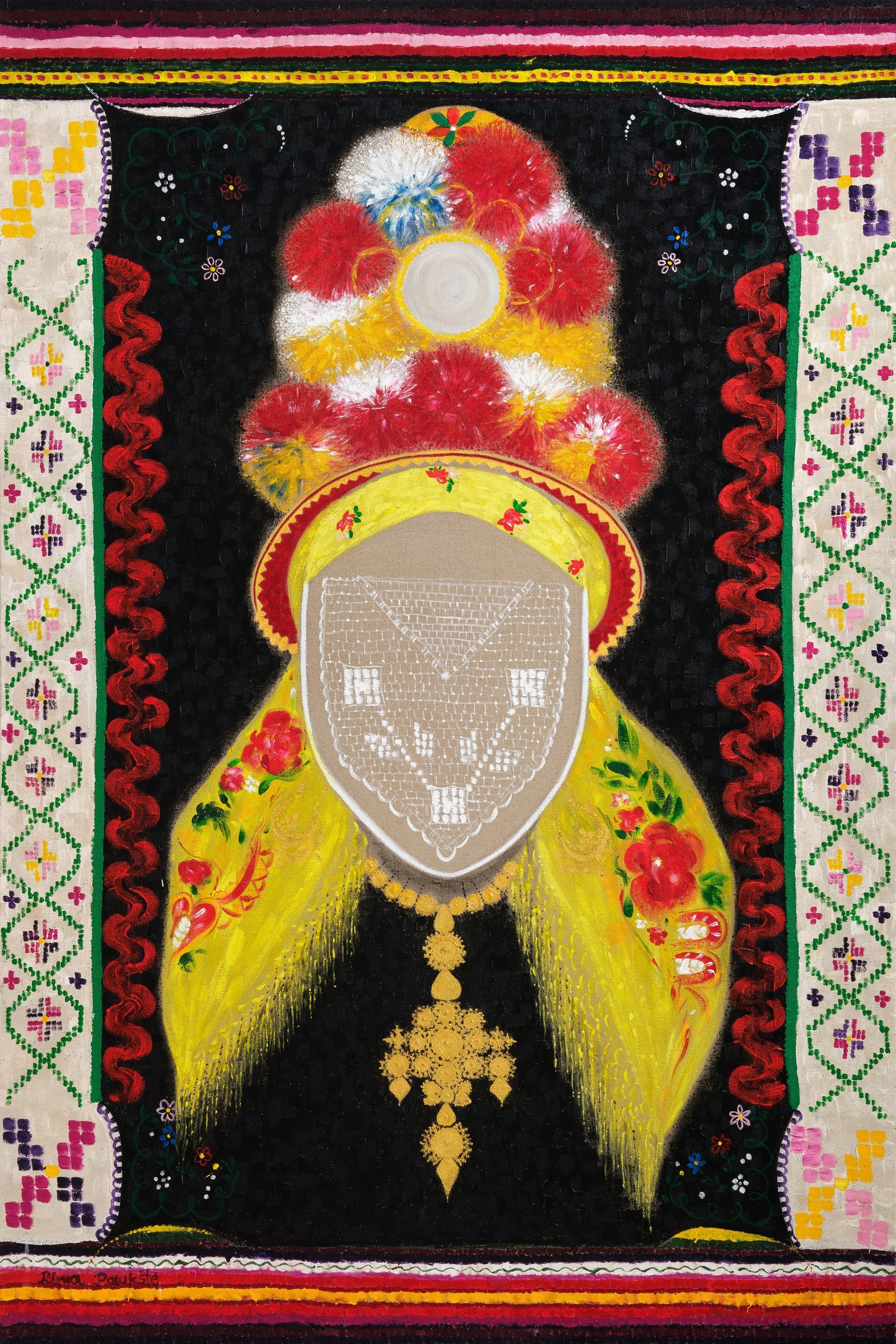
The Woman Who Keeps the Traditions
- Collection
- Woman in Patterns — Spain
- Region
- Extremadura
- Year
- 2021
- Medium
- Acrylic on natural linen canvas
- Dimensions
- 195 × 130 cm
Artist-Signed Fine Art Print
A fine-art reproduction of the original painting, hand-signed by Rima Paukste. Clearly distinguished from the original acrylic on linen.
All prices include VAT and complimentary shipping to eligible continental European destinations.
For delivery outside our standard European shipping area, please contact us for a personalised shipping quotation.
Delivery within 2–4 weeks of the order date · rolled canvas, unstretched and unframed · Certificate of Authenticity included
Print details
Each print bears the artist's original handwritten signature, applied by hand — never a reproduced signature.
Premium Quality Canvas
We use premium-quality, exceptionally durable white canvas with a refined, natural fabric texture. This carefully selected material ensures outstanding colour accuracy, faithfully reproducing every shade and subtle nuance of the original artwork.
Each piece is printed using advanced 12-colour printing technology with genuine, eco-friendly, odourless inks. The result is rich, vibrant colours, exceptionally smooth tonal transitions, and a beautifully matte finish that captures delicate shadows and the finest details.
The ink manufacturer guarantees over 100 years of fade resistance, ensuring that the artwork retains its original beauty and colour intensity for generations.
Shipping & Presentation
Each artwork is carefully packaged and delivered by post or courier service within 2–4 weeks of the order date.
The canvas is supplied unstretched and unframed, carefully rolled for safe transportation and ready to be stretched onto a wooden stretcher frame.
Every artwork is accompanied by an original Certificate of Authenticity, certifying the authenticity of the artist's work.
Original Artwork — Price Upon Request
Originals are offered by private enquiry. Shipping, insurance and installation are arranged individually.
She travels along small paths, through groves, mountains, and valleys, carefully inspecting her holdings.
You'll find her in cherry and almond orchards in full bloom. She has been here for so long... preserving each village and its history.
She transforms everything into a grand celebration, a carnival, dancing and having fun until morning among her beloved ones!
Continue reading
reminiscent of gold, silver, and copper.
The plant motifs symbolise the renewal of life that arises from the interaction between the masculine element of heaven and the feminine element of earth. It is no coincidence that in ancient art, plant motifs are often combined with celestial symbols. The feminine element, which gives birth to all living things, is not directly visible in this art; it must be sensed. Only its fruit – the plant – is depicted.
The headdress depicted in the painting is Montehermoseña, a symbol of the region and an integral part of the traditional costume of the province. Its striking decoration makes it one of the most distinctive headdresses in Spain. The base of the hat is crafted by hand, using seven rye straws to weave a braid that measures 12 to 14 meters in length. Once the base is completed, various decorations are added, including wool bubbles, mother-of-pearl buttons, pieces of felt, and sequins.
A small rotated cross – two lines crisscrossed with each other – is the knot of happiness. The rotated cross is the knot of life, the eternal knot of happiness. It means protection and blessing. The rotated cross – the knot – symbolises a person who is affected and protected by the forces of heaven and earth. At the same time, the person is the link between the two. The arrow from above signifies heavenly protection, and the arrow from below indicates the earthly forces acting on the person. At the intersection of these "above" and "below" powers, the person finds themselves at a point of transformation, in a dangerous, precarious state – yet at the same time protected and sheltered both by the "above" and the "below". The knot has the significance of magical protection. It is the meeting point of the powers of heaven and earth. It is a symbol of transformation, indicating a change, a shift from one stage of life to another. The moment of transformation is precisely that point of intersection between two different states. It is a symbol that reminds us of the necessity of human change – inner, spiritual, outer.
A circle is a symbol of the Sun, sometimes surrounded by sunbeams.
The angular band of triangles surrounding the headdress symbolises the goddess Mara, who is capable of creation and giving birth.
The rosette symbol on the sides, set against a white background, represents the Tree of Life, signifying love, beauty, and health.
In ancient civilisation, the triangle represented fire, water, man and woman.
The colours
- Red is the colour of activity and energy, reflecting the vibrancy of life in spring.
- Black, the colour of the earth, represents life and has long been associated with the Mother Goddess.
- Yellow is the colour of the Sun and gold, implying radiance, shimmer, and glow,
- White denotes holiness. It stands for the capacity to be calm, beautiful, harmonious, foster harmonious relationships, and remain healthy and integral.
- Green represents nature and peace.
- Purple means energy, moving forward, and the desire to become different and make a difference.
- The red snake pattern on the hat represents life and renewal.