The Woman Who Is the Vine
- Collection
- Woman in Patterns — Spain
- Region
- La Rioja
- Year
- 2021
- Medium
- Acrylic on natural linen canvas
- Dimensions
- 195 × 130 cm
Artist-Signed Fine Art Print
A fine-art reproduction of the original painting, hand-signed by Rima Paukste. Clearly distinguished from the original acrylic on linen.
All prices include VAT and complimentary shipping to eligible continental European destinations.
For delivery outside our standard European shipping area, please contact us for a personalised shipping quotation.
Delivery within 2–4 weeks of the order date · rolled canvas, unstretched and unframed · Certificate of Authenticity included
Print details
Each print bears the artist's original handwritten signature, applied by hand — never a reproduced signature.
Premium Quality Canvas
We use premium-quality, exceptionally durable white canvas with a refined, natural fabric texture. This carefully selected material ensures outstanding colour accuracy, faithfully reproducing every shade and subtle nuance of the original artwork.
Each piece is printed using advanced 12-colour printing technology with genuine, eco-friendly, odourless inks. The result is rich, vibrant colours, exceptionally smooth tonal transitions, and a beautifully matte finish that captures delicate shadows and the finest details.
The ink manufacturer guarantees over 100 years of fade resistance, ensuring that the artwork retains its original beauty and colour intensity for generations.
Shipping & Presentation
Each artwork is carefully packaged and delivered by post or courier service within 2–4 weeks of the order date.
The canvas is supplied unstretched and unframed, carefully rolled for safe transportation and ready to be stretched onto a wooden stretcher frame.
Every artwork is accompanied by an original Certificate of Authenticity, certifying the authenticity of the artist's work.
Original Artwork — Price Upon Request
Originals are offered by private enquiry. Shipping, insurance and installation are arranged individually.
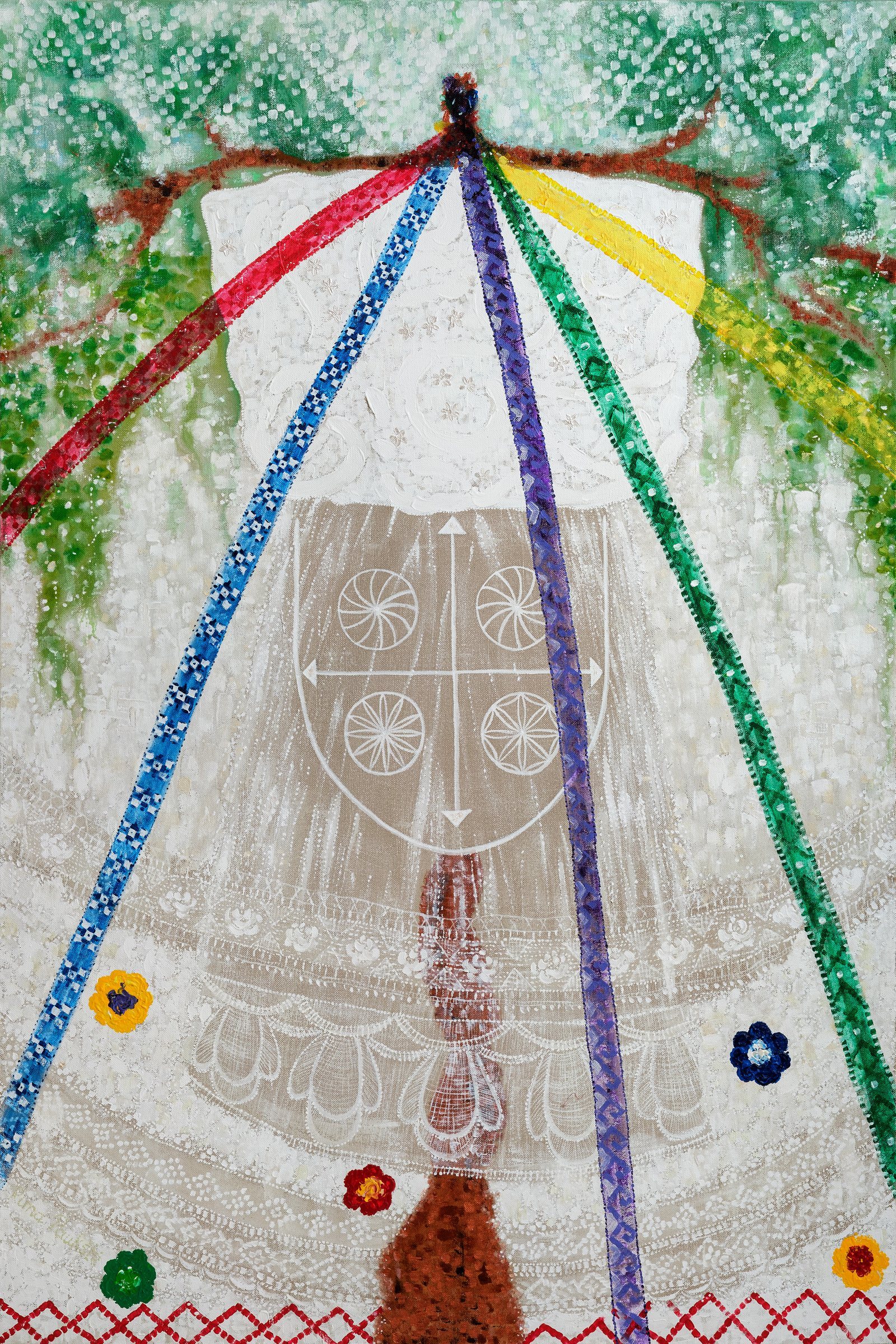
Maintaining balance in life! That's what truly matters. Like a vine, the woman yields to the cycles of the earth to find the strength to renew herself, live fully in the present, and bear fruit. She dances the merry dance of the "albelda" in the swirl of the bands, maintaining fellowship with her loved ones and keeping her balance.
Let's go round in circles!
The vine or grapevine symbolises the path of human life, where the destiny is shaped only by the person themselves. Only the person themselves can fight for their personal dreams.
Continue reading
The vine and its fruit bring much joy; it is a tree of joy. Its unpredictable secrets are unveiled by winemakers each time. And the flavourings for cakes from this tree are delightful! Dried fruit is a true sweet joy. The vine mirrors a woman's joyful heart and her unpredictable nature, much like wine does. You never know what kind of harvest you'll get or what kind of wine will you get to drink when it matures.
This colour green embodies peace, happiness, fertility, confidence, rebirth, playfulness, youth, and inspiration. Green is a magnet for wealth, a healing force, and a protector of emotions. It represents generosity, and with it comes the growth of wisdom and understanding.
The sun sign/spiral is humanity's oldest symbol, intimately connected with the sun, life, and reincarnation. The constant movement of time. Mother Earth, reminiscent of the interrelationship between earth, water, and sky.
A circle is a symbol of the sun, sometimes surrounded by sunbeams. It also represents fire, perfection and eternity, fidelity.
A rotated cross is a sign of life, the eternal knot of happiness, the sign of fire.
A cross is an ancient and frequently used symbol. Historically, it was used to mark loaves of bread before baking, symbolising the relationship between spirit (heaven, God) and matter (earth).
A cross marks the relationship between spirit (heaven, God) and matter (earth). It is a sign of fire, a source of energy and power that nourishes the earth and human being.
Lankutė – the small bow – is the cup and the boat, the shallop and the coffin, the hollow, the bed and the cradle, and the womb.
The straight line represents the land of the goddess Mara.
The sashes depict the following symbols: small snake, little star/rosette, a crayfish, žirgeliai (ornament of horses), a dot, and lankutė (small bow).
The small snake and lankutė – the small bow – stand for the goddess Mara.
A rosette, a little star is the tree of life, love, beauty and health.
Varnaakis – the eye of the crow – signifies fertility, the earth, and the "navel of the world."
A dot is the beginning and the ending of everything.
The symbolic pattern of horses – known as žirgeliai – stands for heaven.
The plant motifs symbolise the renewal of life that arises from the interaction between the masculine element of heaven and the feminine element of earth. Its fruit – the plant – is depicted.
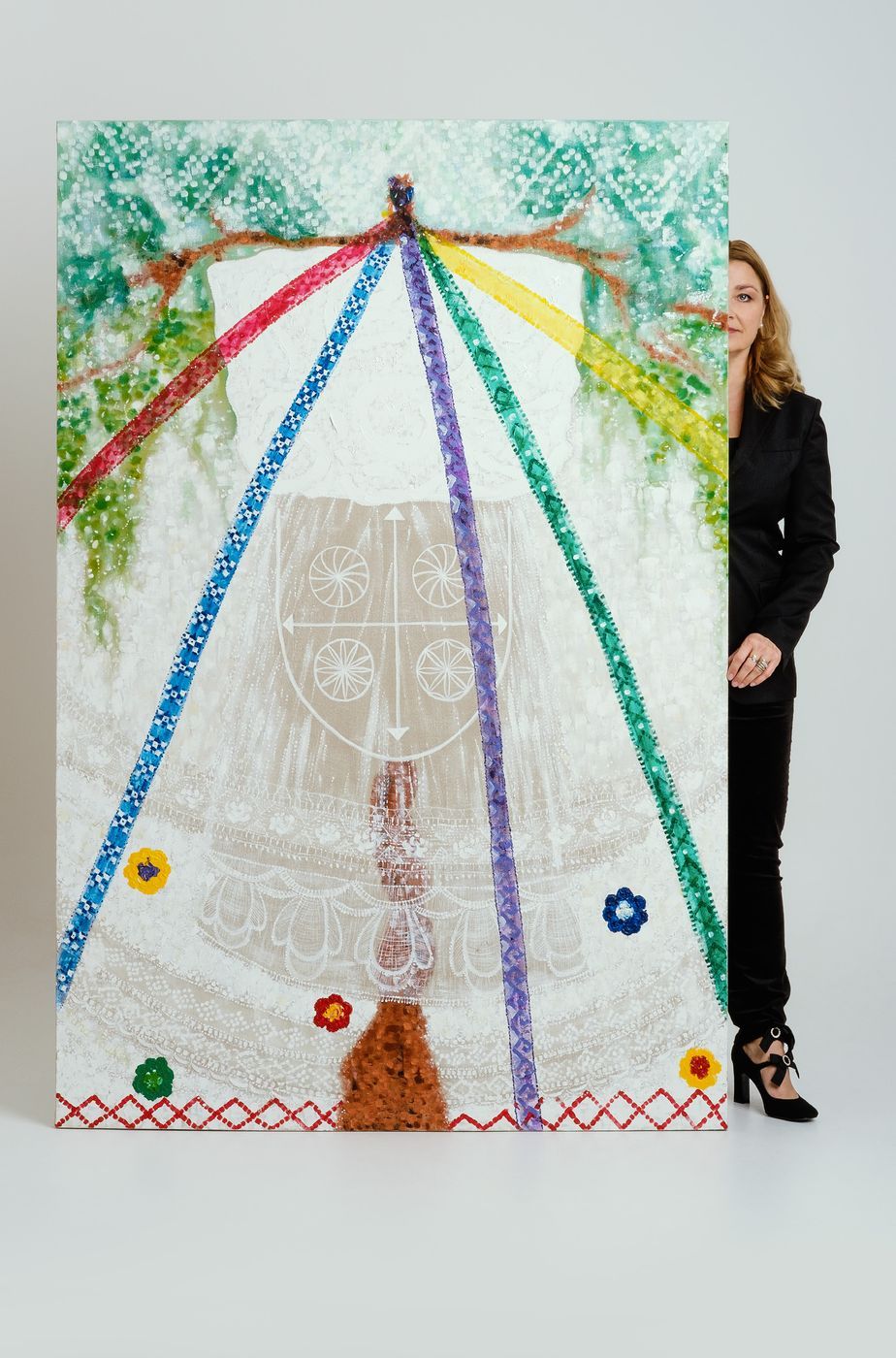
The painting captures a scene from the traditional dance "Albelda de Iregua," performed along the banks of the Iregua river. This dance, widely celebrated across La Rioja, features a central pole held by a foot and two dancers. From the top of the pole, eight colourful ribbons extend. The painting replaces the traditional pole with a woman–vine, symbolising the tree of joyous life. The colourful ribbons extending from her represent the paths of human life, each one long and full of colour. The vine, turning in its own joyful rhythm, continuously unveils new ribbons, each one woven by life's experiences.
In the Santo Domingo area of La Rioja, there is a traditional costume known as the 'Doncella de Santo Domingo'. This striking attire, which features a white dress and white stockings, is prominently displayed during the Santo Domingo de la Calzada celebrations. During these festivities, a large group of young women/goddesses, dressed in this costume, process alongside the patron saint. Central to this depiction is the most spectacular element of the traditional La Rioja costume: a basket adorned with white satin fabric and white twisted rings. The girls carry this basket with two handles of ropes sewn inside, symbolising life's delicate balance.
In the painting, the woman is shown with a white, decorated basket full of ripe grapes, the fruit of the vine, balanced gracefully on her head. To maintain this balance, she holds the basket securely on both sides, ensuring the fruit doesn't spill, symbolising her ability to carry life's burdens safely and nurture them into something precious – good wine.
May the vine of joy yield bountiful and rich fruit!
The colours
- White denotes holiness. It stands for the capacity to be calm, beautiful, harmonious, foster harmonious relationships, and remain healthy and integral.
- Yellow is the colour of the Sun and gold, implying radiance, shimmer, and glow.
- Purple means energy, moving forward, and the desire to become different and make a difference.
- Red is the colour of activity and energy, reflecting the vibrancy of life in spring.
- Blue is the colour of the sky and the sea, eternity. Water stands for the beginning of life.