The Woman Who Fills the Life with Joy
Džiaugsmo pripildanti moteris
- Collection
- Woman in Patterns — Lithuania
- Region
- Dzūkija
- Year
- 2017
- Medium
- Acrylic on natural linen canvas
- Dimensions
- 195 × 130 cm
Artist-Signed Fine Art Print
A fine-art reproduction of the original painting, hand-signed by Rima Paukste. Clearly distinguished from the original acrylic on linen.
All prices include VAT and complimentary shipping to eligible continental European destinations.
For delivery outside our standard European shipping area, please contact us for a personalised shipping quotation.
Delivery within 2–4 weeks of the order date · rolled canvas, unstretched and unframed · Certificate of Authenticity included
Print details
Each print bears the artist's original handwritten signature, applied by hand — never a reproduced signature.
Premium Quality Canvas
We use premium-quality, exceptionally durable white canvas with a refined, natural fabric texture. This carefully selected material ensures outstanding colour accuracy, faithfully reproducing every shade and subtle nuance of the original artwork.
Each piece is printed using advanced 12-colour printing technology with genuine, eco-friendly, odourless inks. The result is rich, vibrant colours, exceptionally smooth tonal transitions, and a beautifully matte finish that captures delicate shadows and the finest details.
The ink manufacturer guarantees over 100 years of fade resistance, ensuring that the artwork retains its original beauty and colour intensity for generations.
Shipping & Presentation
Each artwork is carefully packaged and delivered by post or courier service within 2–4 weeks of the order date.
The canvas is supplied unstretched and unframed, carefully rolled for safe transportation and ready to be stretched onto a wooden stretcher frame.
Every artwork is accompanied by an original Certificate of Authenticity, certifying the authenticity of the artist's work.
Original Artwork — Price Upon Request
Originals are offered by private enquiry. Shipping, insurance and installation are arranged individually.
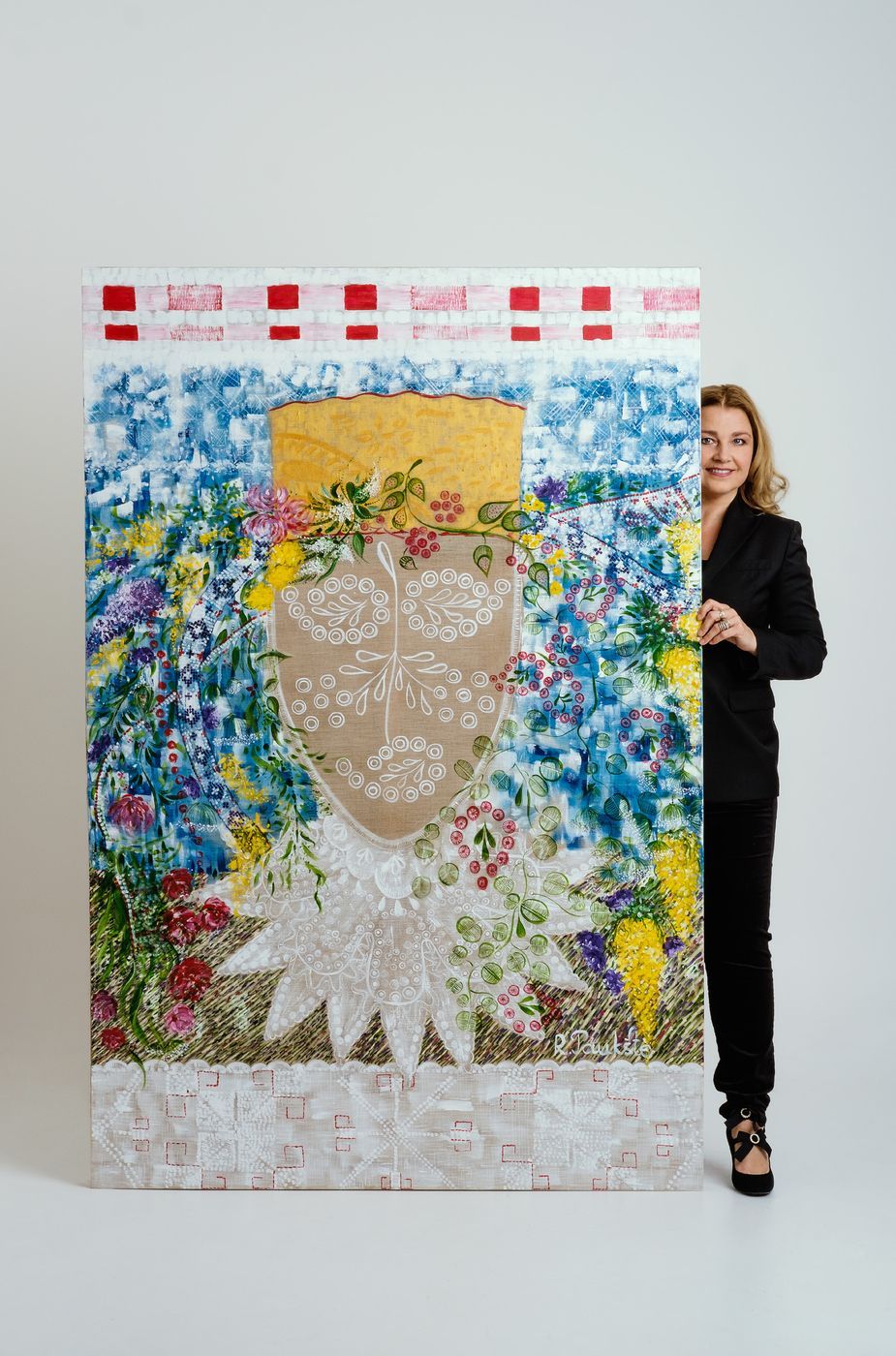
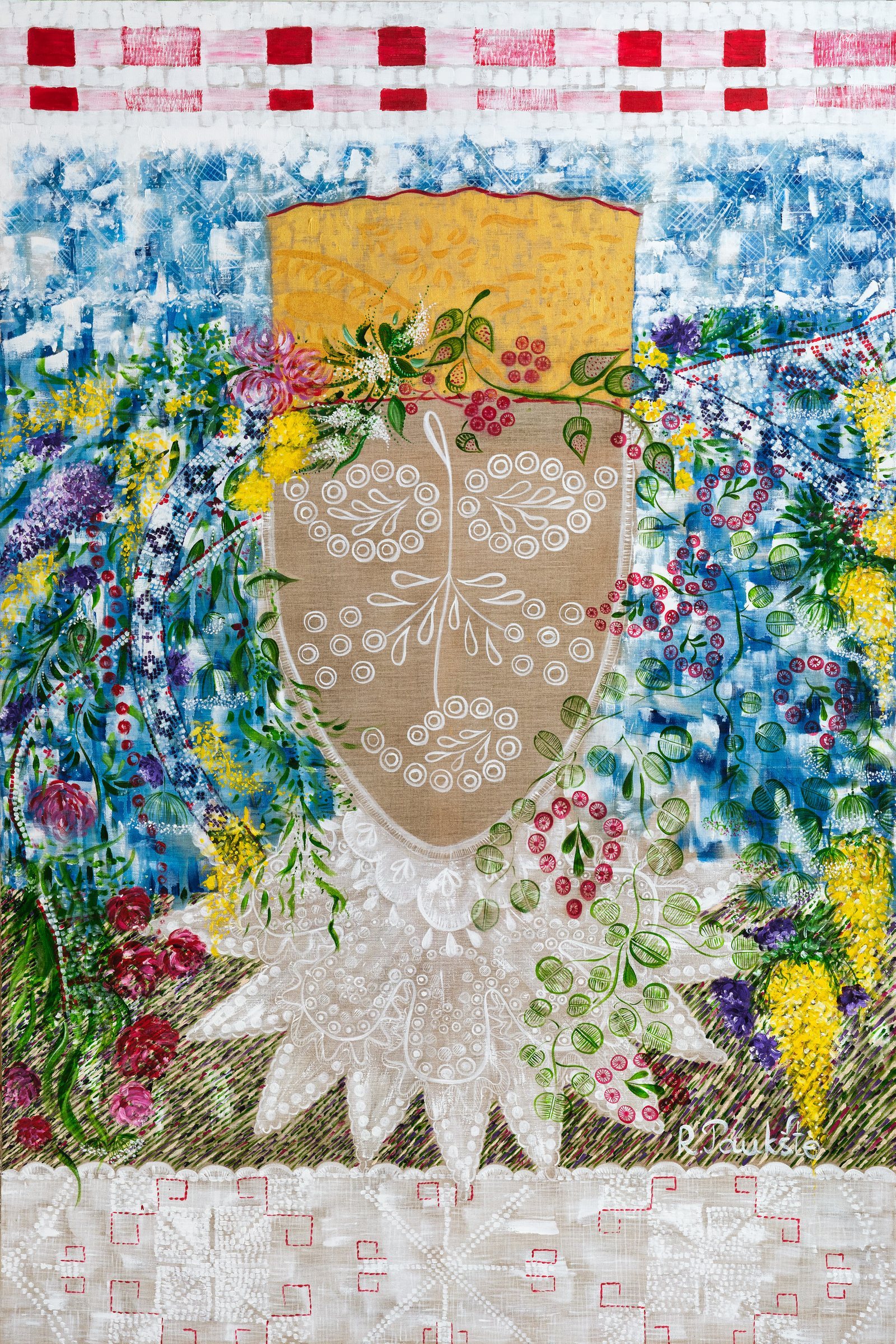
You are a Woman who brings joy with her smile, envelops one in love, and showers one with blossoms. Your garden flourishes because you, too, are in full bloom. You manage to do everything – cover the whole family with your woven fabrics, do all the chores, and delight your loved ones with delicious pastries. Through songs, you celebrate your beautiful days, full of peace and love. Your hands are full of fruit!
The painting shows a scene of a Woman in a garden. Her smile glows amidst the blossoms of the garden and its patterns. Here, the lilacs exude a captivating fragrance, and the hops are full of blossom. This plant serves as a fitting metaphor for the woman's remarkable ability to handle every task with grace and punctuality. It is amazing how multifunctional the plant is! Not only does it enhance the landscape with beauty and shade, growing up to six meters tall, but it also possesses medicinal properties and is used in perfumery. The fibre from hop stems can be woven into sacking material, twisted into ropes, used to make paper, and even utilised for dyeing fabrics.
The variety of colours adds joy, boldness, and character. The bedspreads woven by a woman and their adorning patterns tell a new tale filled with humorous stories and her dreams. She sings happily while tending to her chores.
Continue reading
In the painting, the various branch-like dashes symbolise plants growing upwards.
The diagonal dashes are symbols of rain.
Falling leaves symbolise a hard-working person, bent from the strain of their labour.
A simple straight line represents the goddess Žemyna, or Earth Mother – the goddess of the earth's fertility, the Mother of the Dead. She gives birth to new life and makes the earth fertile.
A rotated cross, the two lines crisscrossed with each other, is the knot of life, the eternal happiness. It means protection and blessing.
A rotated cross – the knot – symbolises a person who is affected and protected by the forces of heaven and earth. At the same time, the person is the link between the two. The arrow from above signifies heavenly protection and the arrow from below indicates the earthly forces acting on the person. At the intersection of these "above" and "below" powers, the person finds themselves at a point of transformation, in a dangerous, precarious state – yet at the same time protected and sheltered both by the "above" and the "below". The knot signifies magical protection. It is the meeting point of the powers of heaven and earth. It is a symbol of transformation, indicating a change, a shift from one stage of life to another. The moment of transformation is precisely that point of intersection between two different states. It is a symbol that reminds us of the necessity of human change – inner, spiritual, outer. It is the sign of the stars, the fire.
The lines connected by curved corners (in red) are horses – žirgeliai, a symbol of fertility, wealth, and happiness.
A double combination of triangles and angles is used as a decorative element. It was believed to bring good luck.
A rhombus – the eye of the crow – painted on the sash represents the earth and fertility. It is the sign of Žemyna, the goddess of the earth.
The plant motifs symbolise the renewal of life that arises from the interplay between the masculine element of heaven and the feminine element of earth.
A circle symbolises the Sun, often depicted with sunbeams radiating from it. In the intersections of the crosses, the sun "shines". It also signifies fire, perfection, eternity, and fidelity. Indeed, the wedding ring, too, is a circle.
The colours
- Red is the colour of activity and energy, representing the vibrant life of spring.
- Yellow is the colour of the Sun and gold, implying radiance, shimmer, and glow, reminiscent of gold, silver, and copper.
- White denotes holiness. It stands for the capacity to be calm, beautiful, harmonious, foster harmonious relationships, and remain healthy and integral.
- Green represents nature and peace.
- Blue symbolises eternity.