The Woman–Eternity
- Collection
- Woman in Patterns — Spain
- Region
- Catalonia
- Year
- 2022
- Medium
- Acrylic on natural linen canvas
- Dimensions
- 195 × 130 cm
Artist-Signed Fine Art Print
A fine-art reproduction of the original painting, hand-signed by Rima Paukste. Clearly distinguished from the original acrylic on linen.
All prices include VAT and complimentary shipping to eligible continental European destinations.
For delivery outside our standard European shipping area, please contact us for a personalised shipping quotation.
Delivery within 2–4 weeks of the order date · rolled canvas, unstretched and unframed · Certificate of Authenticity included
Print details
Each print bears the artist's original handwritten signature, applied by hand — never a reproduced signature.
Premium Quality Canvas
We use premium-quality, exceptionally durable white canvas with a refined, natural fabric texture. This carefully selected material ensures outstanding colour accuracy, faithfully reproducing every shade and subtle nuance of the original artwork.
Each piece is printed using advanced 12-colour printing technology with genuine, eco-friendly, odourless inks. The result is rich, vibrant colours, exceptionally smooth tonal transitions, and a beautifully matte finish that captures delicate shadows and the finest details.
The ink manufacturer guarantees over 100 years of fade resistance, ensuring that the artwork retains its original beauty and colour intensity for generations.
Shipping & Presentation
Each artwork is carefully packaged and delivered by post or courier service within 2–4 weeks of the order date.
The canvas is supplied unstretched and unframed, carefully rolled for safe transportation and ready to be stretched onto a wooden stretcher frame.
Every artwork is accompanied by an original Certificate of Authenticity, certifying the authenticity of the artist's work.
Original Artwork — Price Upon Request
Originals are offered by private enquiry. Shipping, insurance and installation are arranged individually.
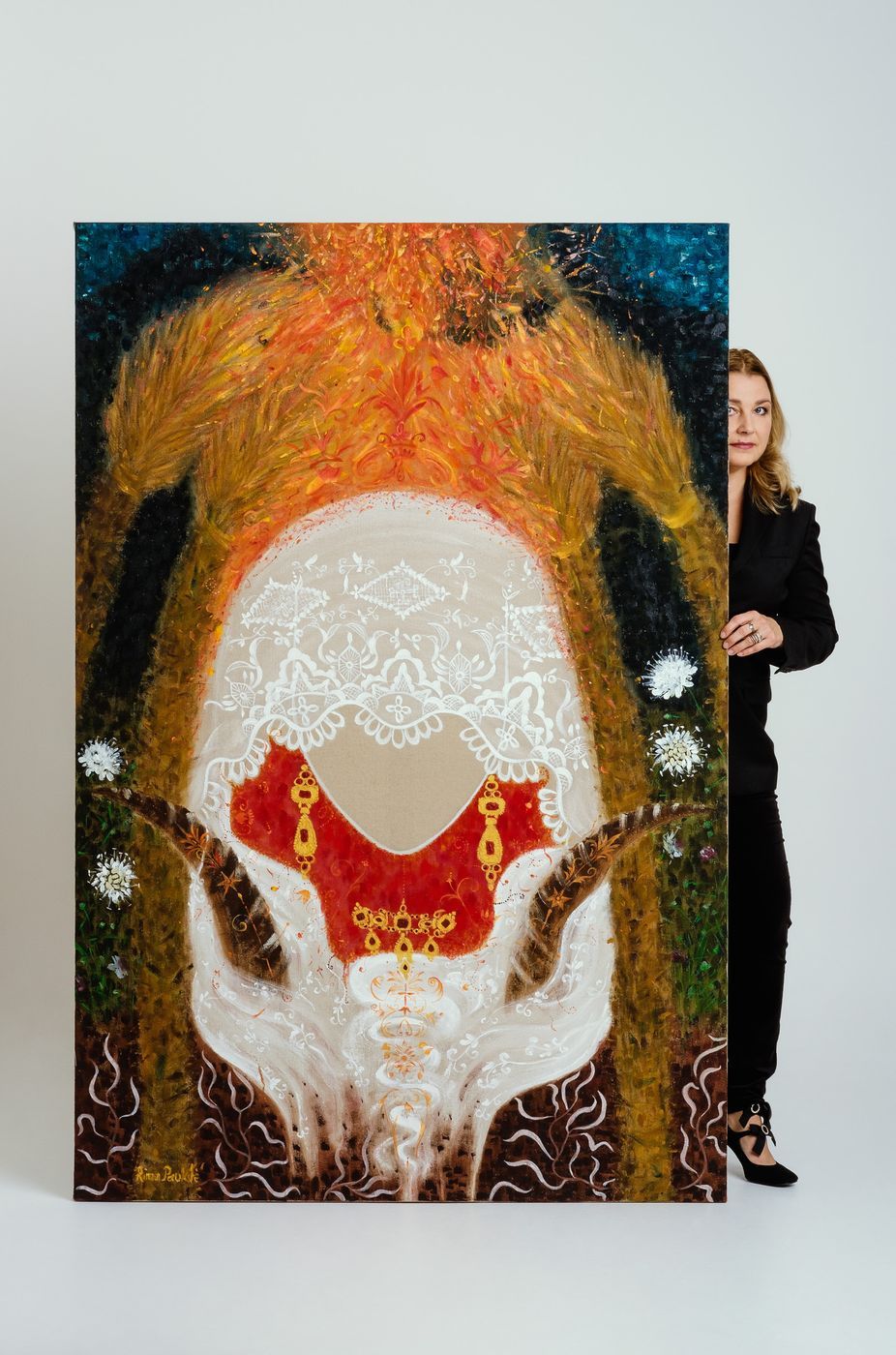
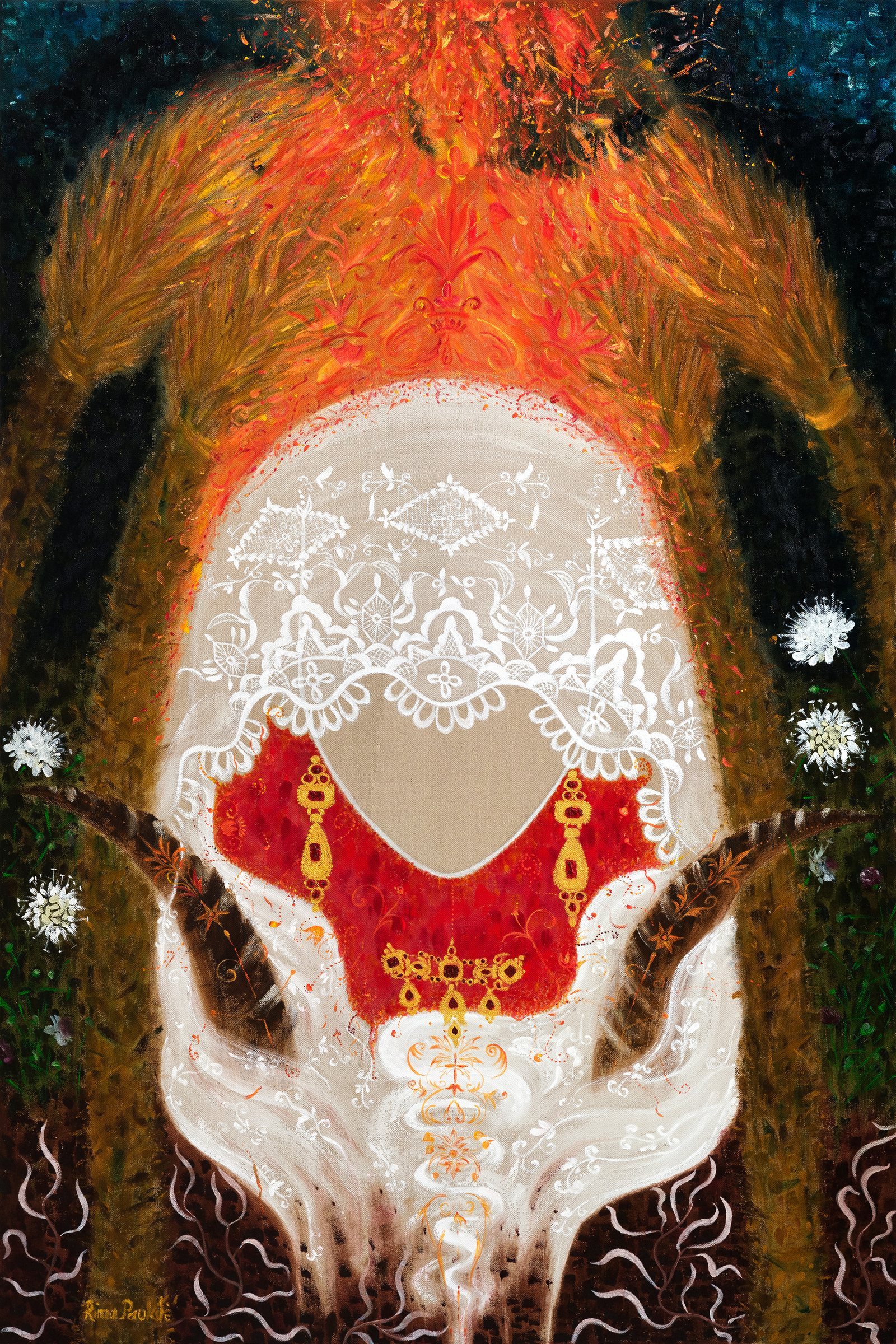
The woman who walks through fire yet does not burn, purifies herself and preserves the eternal essence.
Yes, she is all that – all-bearing, tireless in her work, always in motion, singing, and knowing the world's deepest secrets. Her vessels overflow with the oil of joy, and she renews herself each time, burning bright and rising from the ashes. She is a witch, holding both spring and winter within her.
Sing that powerful melody that transforms everything it touches. Eternity rests in your hands.
Continue reading
In ancient times, it is said that the people of the Pyrenees would ward off darkness and evil spirits during the shortest night of the year by lighting bonfires atop the mountains. They would then carry torches down into the valley to ignite a large bonfire, believed to renew the sun's strength for the morning.
The painting depicts the burning of "beeches", which are tall dried grasses of the Cephalaria leucantha species, commonly known as "white scabies." These grasses can grow up to four meters tall, bloom white, and are reputed to have purifying properties.
The "Fia-Faia" torches, made from these herbs, are often used for wrapping the trunk of a tall log that symbolises the soul. In some traditions, the log is not used, and the tall torches are simply tied up from these purifying herbs.
In the painting, the red pattern representing the world tree is subtly visible over the white veil within the fire. The Tree of the World grows at the centre of the universe. Its three parts represent distinct zones: the roots symbolise the underworld, the trunk represents the earth, and the branches and top denote the sky. The Tree of the World is also associated with time – past, present, and future.
It burns in the eternal fire of life but remains indestructible, as it is perpetually alive.
The sweep pattern resembles a threshold. It sweeps away the unwanted and protects against evil. The vertical strokes in the pattern symbolise the beginning and the end – marking the end of one stanza and the beginning of the next.
The slashes signify a new flow.
The painting depicts the Woman engulfed in the centre of a bonfire, draped in a white veil. Beneath this veil lies a hidden mystery, symbolising new life and forthcoming changes. It appears as though she is passing through the fire, not perishing but being purified to give birth to something new.
The goat's horns symbolise fertility.
The veil itself is adorned with numerous patterns. One of these symbols is the well, representing the world's symmetry. In its water, the World Tree is reflected to the world beyond. The well, much like a spring, is considered the "eye of the earth," serving as an opening to the underworld. It is a place where one can glimpse their future and destiny.
A cross is an ancient and frequently used symbol. Historically, it was used to mark loaves of bread before baking, symbolising the relationship between spirit (heaven, God) and matter (earth).
It is a sign of fire, a source of energy and power that nourishes the earth and human being.
A hexagonal star is the symbol of the sun. It is one of the world's oldest symbols of the sun and light.
The plant motifs symbolise the renewal of life that arises from the interaction between the masculine element of heaven and the feminine element of earth. This interaction is represented by the plant, which embodies the fruit of this unity.
The colours
- The white element on the front of her garment represents the womb and also evokes images of the serpent and dragon. This element serves as a symbol of home, the hearth, deceased ancestors, wealth, fertility, health, and the fertility deity.
- Green represents nature and peace.
- White denotes holiness. It stands for the capacity to be calm, beautiful, harmonious, foster harmonious relationships, and remain healthy and integral.
- Black, the colour of the earth, represents life and has long been associated with the Mother Goddess.
- The redness of the lily represents activity and energy, reflecting the vibrancy of life in spring.